During her creative minor, Joelle Doorn decided she wanted to do something to make autism understandable and open for discussion. She designed an escape game, something no one had thought of before.
““How severe is your autism?” Windesheim student Joelle (22) was asked this question when she came to play her self-designed game with a group of 8th graders. She attended the same school years ago when she was diagnosed. “That is an interesting question,” Joelle replied to the student, “You can’t actually have ‘severe’ or ‘less severe’ autism, but I can tell you what characteristics I have.”
According to Joelle, student Information & Communication Technology, that question clearly shows why her game, named Escape Aut Thism, is needed: “Many people think they understand autism as soon as they know one person with autism, but autism looks different in everyone,” she explains. With her game, she therefore wants to introduce children and adults to those differences in an accessible way.
Joelle came up with the game while taking the Art and Creativity minor. The idea was enthusiastically received everywhere. Joelle started her own student company to pursue it further.
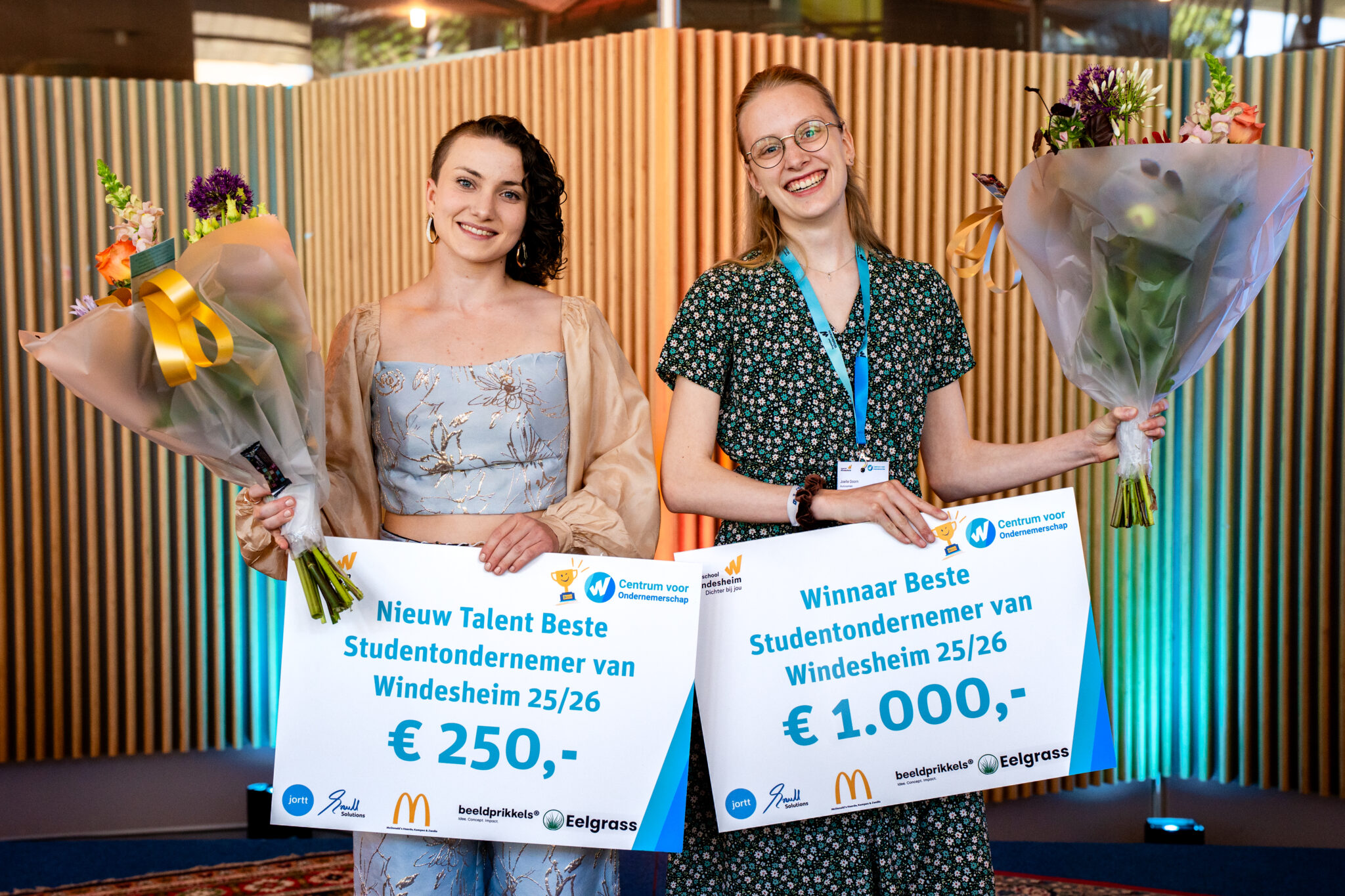
Last month, she even won the final of Windesheim’s competition for best student entrepreneurs.
Decipher
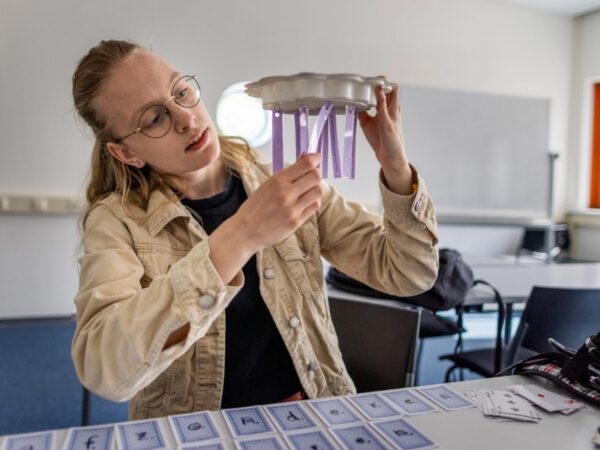
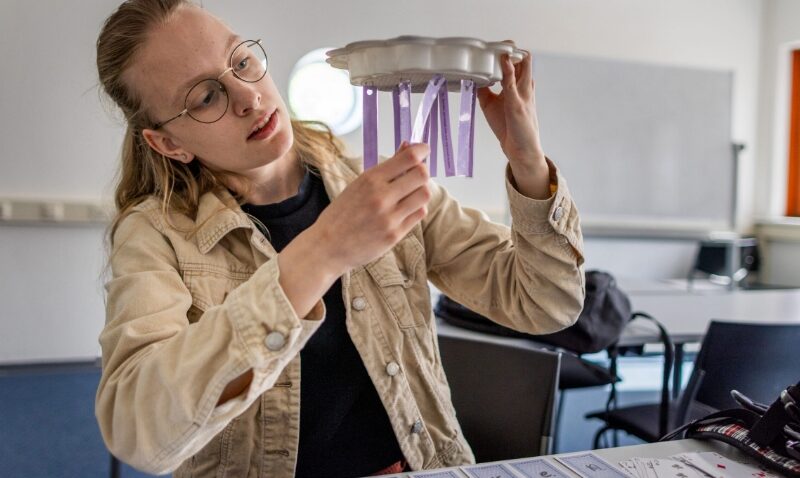
The game begins with a code that participants must decipher. This allows them to access the ‘escape bag’ containing the game. Afterward, players must use colored stones, challenges, and features to discover which cards they ultimately need to give to Joelle. “It is essentially one big puzzle where communication and collaboration are very important.”
She tested the first version of the game with an entire first-year secondary school class. There, she witnessed something special: “There was an autistic boy who was normally quite quiet and withdrawn in class, but during the game suddenly became very social and engaged. He was truly in his element. That was beautiful to see,” she says.
Joelle knows better than anyone that differences between people are not always visible. When she was diagnosed with autism in the eighth grade, there was also a boy with autism in her class. “His autism was much more visible than mine. Because of that, I didn’t really want to associate myself with it. I also didn’t tell other people about it for a long time.”
That is precisely why she believes it is important for children to learn at a young age that autism can look different for everyone. “At that age, a lot of misunderstanding arises, while many children are also diagnosed during that period. Familiarity with autism really makes a difference in this regard.”
Stimuli
She regularly experiences that lack of understanding herself. “Because I process stimuli differently, I get tired more quickly. Some people then think that I am less motivated, while that is not the case at all.” Yet Joelle does not view her autism solely as a difficulty. The qualities that come with it helped her, for example, to create the game. “I am very creative and think a lot in images. At the strangest moments, I suddenly get ideas for new tasks.” She painted the game pieces herself and also designed the cards by hand. “It really cost me a lot of sleep,” she says with a laugh. “But I was willing to sacrifice my sleep.”
Now that Joelle has registered with the Chamber of Commerce (KVK) under the business name Autzoomen, she is also thinking about expanding the concept. “I want to create a lend version of the escape bag, so that schools and organizations can play the game independently with instructional videos. I am graduating next year, so I will have less time to give guest lectures everywhere myself,” she explains. She gets all the bags from secondhand stores. Then, she builds the game around the bag she found. “The way you enter the bag varies each time, but the gist of the game remains the same.”
Spectrum
Although the game revolves around recognition and understanding, Joelle emphasizes that her escape bag does not provide a complete picture of autism. “My game is not broad enough to show the entire spectrum. Some characteristics I have are not included, while some characteristics I don’t have are. The game is primarily an initial introduction and a way to get conversations going.”
Her idea did not go unnoticed at the university of applied sciences either. She saw a call for the ‘Best Student Entrepreneur of Windesheim’ competition and signed up. Initially, she didn’t want to participate at all. “I was afraid it would cost me too much energy and that I wouldn’t be social enough for it. But a friend said: This idea is so well put together and has so much social value. You just have to do this!”
Best student entrepreneur
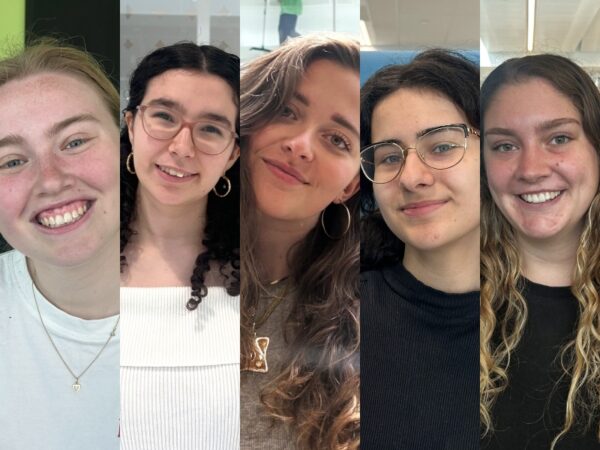
During the preparations for the competition, Joelle even doubted for a moment whether she wanted to continue. “I thought: what if they see all the weak points of my idea?” Yet she reached the semi-finals. At the end of May, Joelle stood in the final of the competition, together with four other student companies. And she won! Joelle was named the best student entrepreneur at Windesheim and received a cheque for 1,000 euros to invest in her company. “I really hadn’t expected to get this far! I thought: if people look at autism differently after the game, that will be enough for me.”
text: Nynke Lautenbag
photo of Joelle: Herman Engbers
photo of contest Beste Studentondernemer: Martijn van der Veer