Meditation and yoga; popular ways to calm both your body and your mind. Four Windesheimers show you how they use yoga and meditation to become completely zen.
“A wobble cushion as an alternative yoga-snack”
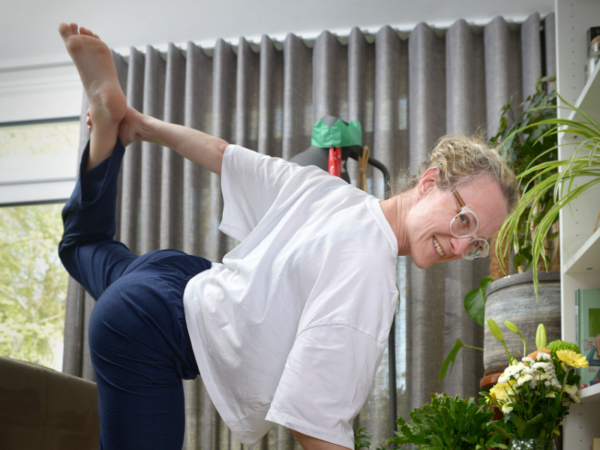
Tina Bellemans is an Associate Professor within the professorship Human Movement, Health and Well-being. Unconsciously, she has been building in moments for ‘yoga-snacks’ ever since her student days.
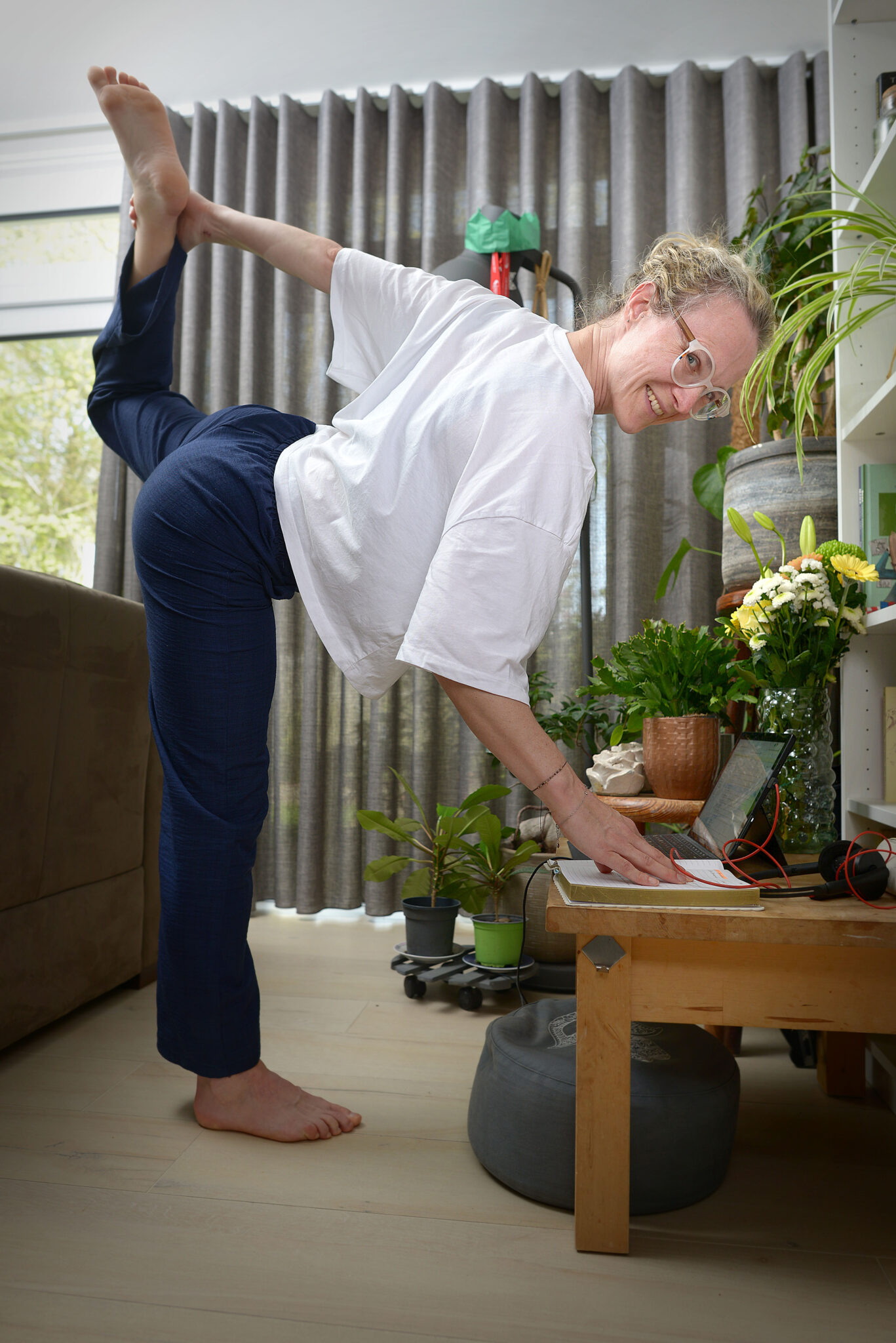
“I think that I was already unconsciously practicing yoga while studying, without realizing that I was seeking out the same “mechanisms of action.” I stood on one leg next to my desk with the other leg in the air to relax for a moment between studying. Then, after standing on one leg, I would do breathing exercises lying on the floor. Not real yoga, of course, but the same elements.
Eight years ago, I consciously started practicing yoga during my PhD. Yoga gives me a grip on my body: it takes me out of my head, and activates and relaxes my body. For me, yoga isn’t about the perfect posture, but about working on yourself. Being able to feel directly into my body, provides balance for myself. When I am doing a yoga exercise now, it gives me a state of meditation: I am aware of the tension in my muscles, but thanks to the calm it brings, I can let go of thoughts that arise in my head. Through the relaxation, I can bring focus to my thoughts. If you ask me why yoga works so well for me, it has to do with your nervous system: yoga regulates the activating and relaxing mechanisms of your body. But actually, you don’t need to know why something works, but just feel that it works.
I often take short, twenty-minute yoga-snacks between work sessions now. If I don’t get around to yoga, I grab a wobble cushion to sit on. Because I have to work on balance then as well, I get out of my head and have to focus on my body. That way, I can get into a state of hyperfocus so I can get back to work afterwards!
‘You don’t have to go to Thailand to get to know yourself’’
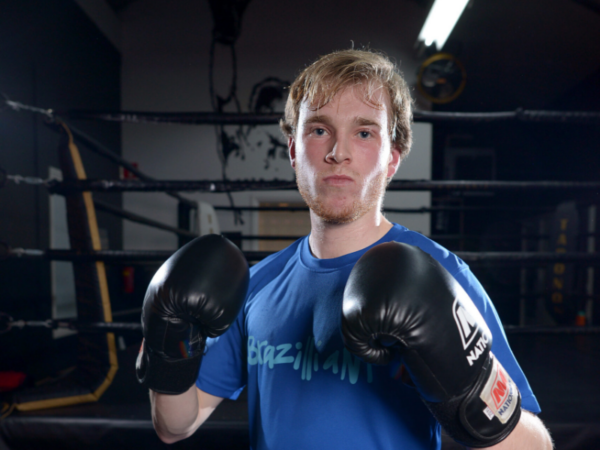
19-year-old Bram Rolink studies Entrepreneurship and Retail Management and has been focusing more on mental health since the pandemic. Meditation has made him more self conscious.
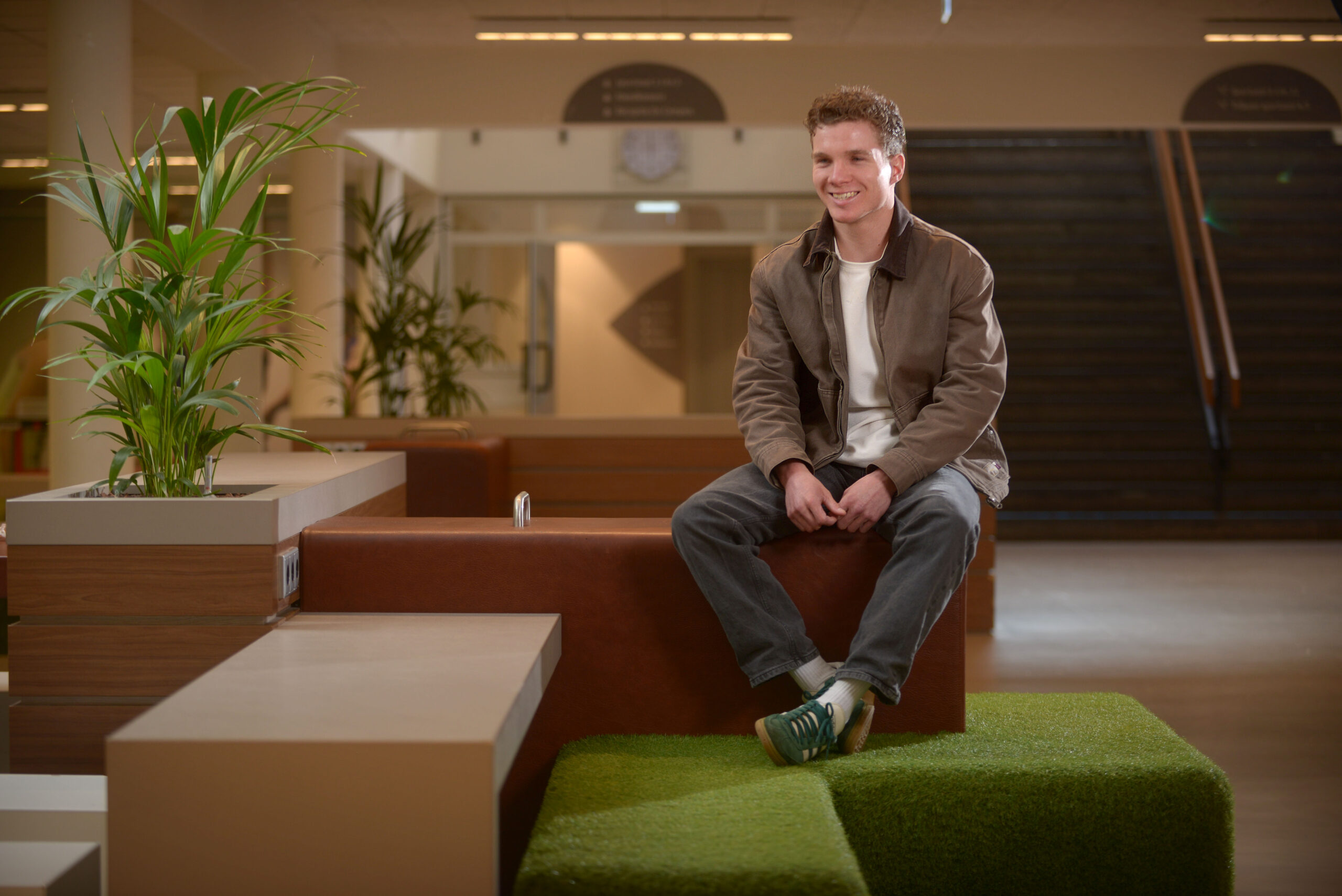
Mental health was a vague subject to me. I am quite down-to-earth myself, and the topic quickly becomes too spiritual. During the pandemic, I spent a lot of time at home. That was when I started delving deeper into mental health. As a young person, I felt directionless: you feel a lot and you know a lot, but where are you supposed to go with those feelings? Last summer, I listened to a podcast about mental health, and in particular, the benefits of meditation. For me, this was a very accessible way to learn more about the subject. As I delved deeper into mental health and meditation, I learned how my mind works and gained insight into myself. Looking back now, I was primarily reactive: I reacted quickly and frequently. Now I am more self-aware: I know my reactions and understand better where they come from. By understanding this, I have more control over my own reactions: I can now anticipate them.
A month ago, I took a meditation class at school. I was the only boy my age there. We started with fifteen minutes of silent meditation, and that was a long time! For me, meditation is a moment when I sit on my bed in silence with my eyes closed. After the class, I was asked if I wanted to contribute my thoughts on youth and mental health. I am now working on creating a plan for this. I especially want to convey to young people that meditation or mental health doesn’t have to be deep right away. You don’t have to share it with everyone either: you do it for yourself. I don’t think my father, for example, even knows that I meditate.”
‘Yoga is my medicine’
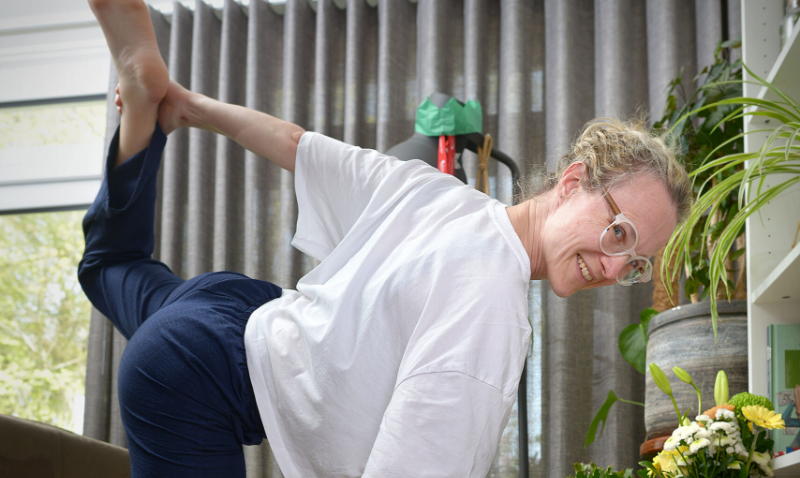
Carla Luten, lecturer at Windesheim business study programs, organizes ‘Mindful Monday’ at Windesheim after experiencing firsthand how valuable yoga and mindfulness can be.
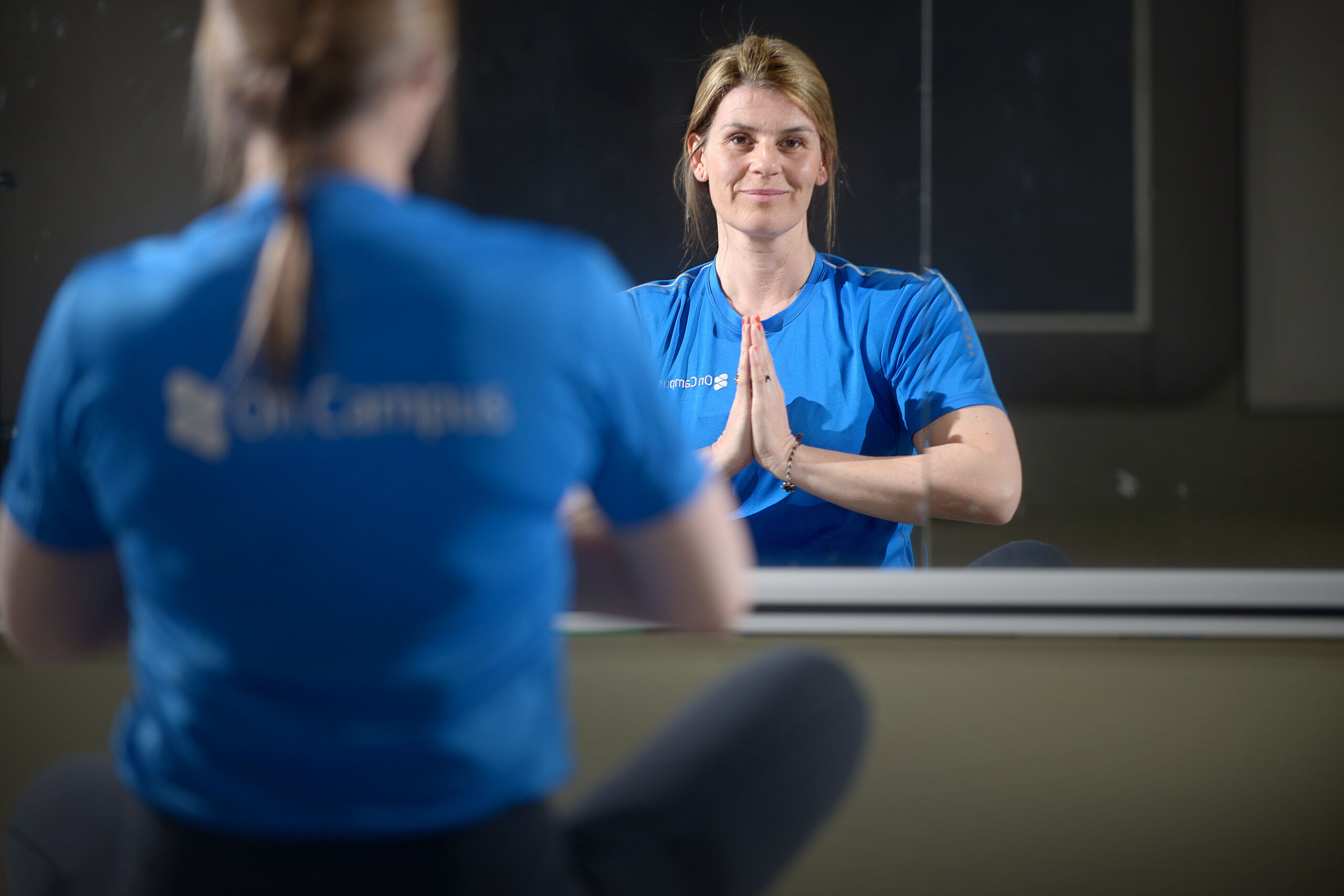
“I was a driven student: always busy, serious, and often lost in my own thoughts. I wasn’t good at relaxing; I had never learned how. I set the bar high and saw myself as a future brand manager. At nineteen, I hit a wall. I developed a herniated disc and, at one point, couldn’t even walk anymore. Through my physiotherapist, I came into contact with Pilates. This form of strength training helped me enormously—physically and mentally. It felt like coming home. Because my back remained a weak spot and I hit a wall again at age 24, I started delving deeper into it and took a course in it.
Ultimately, I didn’t go into the corporate world but ended up in education. At that time, alongside Pilates, I also delved into yoga and completed training in it. While Pilates focuses more on the body, yoga helps me mentally: it teaches me to be gentler, to let go of tension, and to stay grounded—even in the classroom and when interacting with students. For me, it is about connection: with yourself and with others. Nowadays, I teach both yoga and Pilates every Thursday evening at On Campus, and I see what it brings to people: a moment of calm in a busy world. I am so happy and grateful that I can do this.
Yoga has given me more as a teacher than any content-based training. Are you hesitant to start? Allow yourself that rest. Especially now, it is important to pause occasionally and catch your breath. For me, yoga is not a luxury, but a necessity: my medicine to catch my breath and stay grounded.”
‘Yoga was a process of years’
Marcus Popkema is an Associate Professor at the Professorship Networking in a Circular Economy. During the pandemic, he stumbled upon a yoga class by chance at a French campsite.
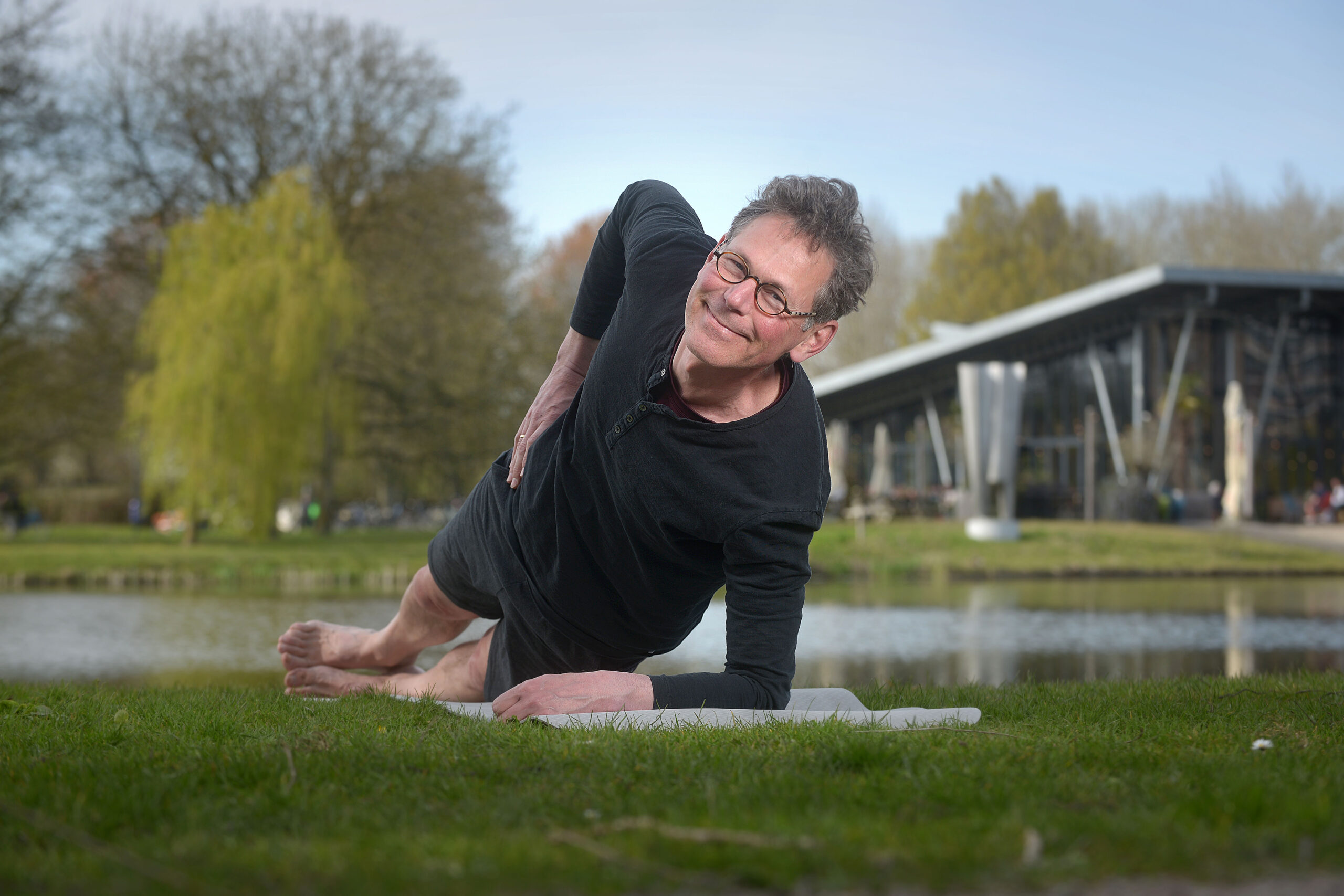
“At some point, you notice that you are getting a bit older. I am 56 now, and with age, you become a bit stiffer. I hadn’t taken the first warning signs my body was giving seriously and noticed the consequences: during the pandemic, I developed carpal tunnel syndrome, first on the left and then on the right. I decided I had to do something to stay flexible. That summer, we were at a campsite in France. A French yoga teacher was giving a workshop there. I decided to join in. And perhaps it was because you are already in a relaxed setting during a holiday, but the workshop felt good! Back in the Netherlands, it was difficult to find something, until I suddenly came across it at OnCampus. I have been doing yoga for three years now. Yoga is good for flexibility and promotes my body awareness. Some yoga exercises have been a process of years for me: I had to struggle a lot before I mastered those poses. In the beginning, I also didn’t understand at all what the teacher meant when she said an exercise was meant to ‘open up your hips’. It sounded a bit odd to me. But the longer I continued, the more I got the hang of it and the better I experienced what the postures bring about.
Now, if I feel something is stuck in my body, I know which exercises to do to loosen it up again. As a result, I haven’t had mouse arm since!”
Text: Boudicca Meerman
Photos: Jasper van Overbeek