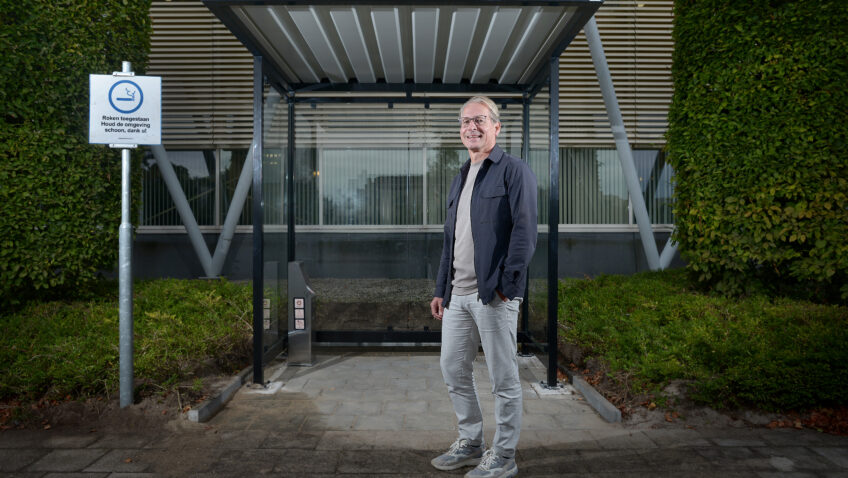
Smokers on the Zwolle campus can now use a covered smoking area during bad weather. At the same time, there will be increased supervision to ensure that no smoking takes place elsewhere on the outdoor grounds.
The existing smoking areas at the edges of the campus grounds were modified and relocated this month.
Since 2020, when the national smoking ban for all outdoor areas of educational institutions took effect, there had been four smoking zones on the public sidewalks adjacent to the campus.
However, many smokers and vapers do not comply with the smoking ban. They often linger near building entrances, sometimes standing with a cigarette right next to a ‘no smoking’ sign, to the annoyance of pedestrians and cyclists entering the buildings.
Discarded cigarette butts can be found everywhere: on the sidewalks, in the flowerbeds, and even in the ponds surrounding the campus.
“We constantly face heated debates and frustrations regarding the smoking policy, especially at the start of each academic year. On one hand, there are non-smokers annoyed by the nuisance and the disregard for the rules; on the other hand, smokers who refuse to walk to the designated smoking areas, particularly in bad weather,” explain Dirk Pieter Halbesma, manager of the Real Estate & Facilities Division, and facilities consultant Mark van Vilsteren.
Smoke curtain
Those ‘discussions’ turn out to go in all sorts of directions, sometimes spoken in no uncertain terms. Conversations about ‘smoke curtains and ‘carpets of cigarette butts’ at the entrances, and ‘groups’ that ‘hang around’ and ‘block the way’ on the sidewalks and bike paths.
Sometimes the discussion begins amicably, focusing on holding one another accountable, raising awareness, and ‘starting a dialogue’ in the classroom. But it often ends with calls for ‘increased supervision,’ a ‘smoking police,’ and ‘strict sanctions’ for smokers who repeatedly cross the line.
In these discussions, smokers vent their frustrations, complaining about how ‘inhumane’ it is to have to stand outside in the street during winter ‘in a downpour,’ just for a single cigarette. Or how they are ‘verbally abused’ by non-smokers.
Halbesma: “It was time to get a better grip on all the consequences and facets of the policy. That is why, last year, we established the Smoking Policy Improvement Project Team—a working group bringing together a diverse range of people, including representatives from the relevant facilities and support departments, as well as smokers and non-smokers.”
Halbesma: “About 1,500 students and staff members on campus smoke. For many of them, it is an addiction. By taking a respectful approach to the smoke-free campus policy, we acknowledge that reality. We wanted to actively involve smokers in the design of the new smoking areas and in the communication process. This way, we aren’t talking about anti-smoking measures, but rather a joint effort to create a healthier, cleaner, and more pleasant learning and working environment for everyone. The starting point remains: smoking is permitted, but only in designated smoking areas.”
Abris
The conclusion was that the existing smoking areas needed improvement. Smokers prefer locations close to the buildings that are covered, allowing them to smoke without getting wet during bad weather. The chosen solution was to install abris, shelters similar to bus shelters, accommodating 8 to 10 people. Instead of ashtray tiles and narrow cigarette disposal posts, larger cigarette disposal units have been installed at the new smoking areas, resulting in fewer cigarette butts ending up on the ground.
Installing abris on the municipality-owned sidewalks turned out not to be feasible. Halbesma: “We have installed abris at three new smoking areas on the edge of the campus grounds area. We tried to position them in such a way that non-smokers experience less nuisance when passing by a smoking area.”
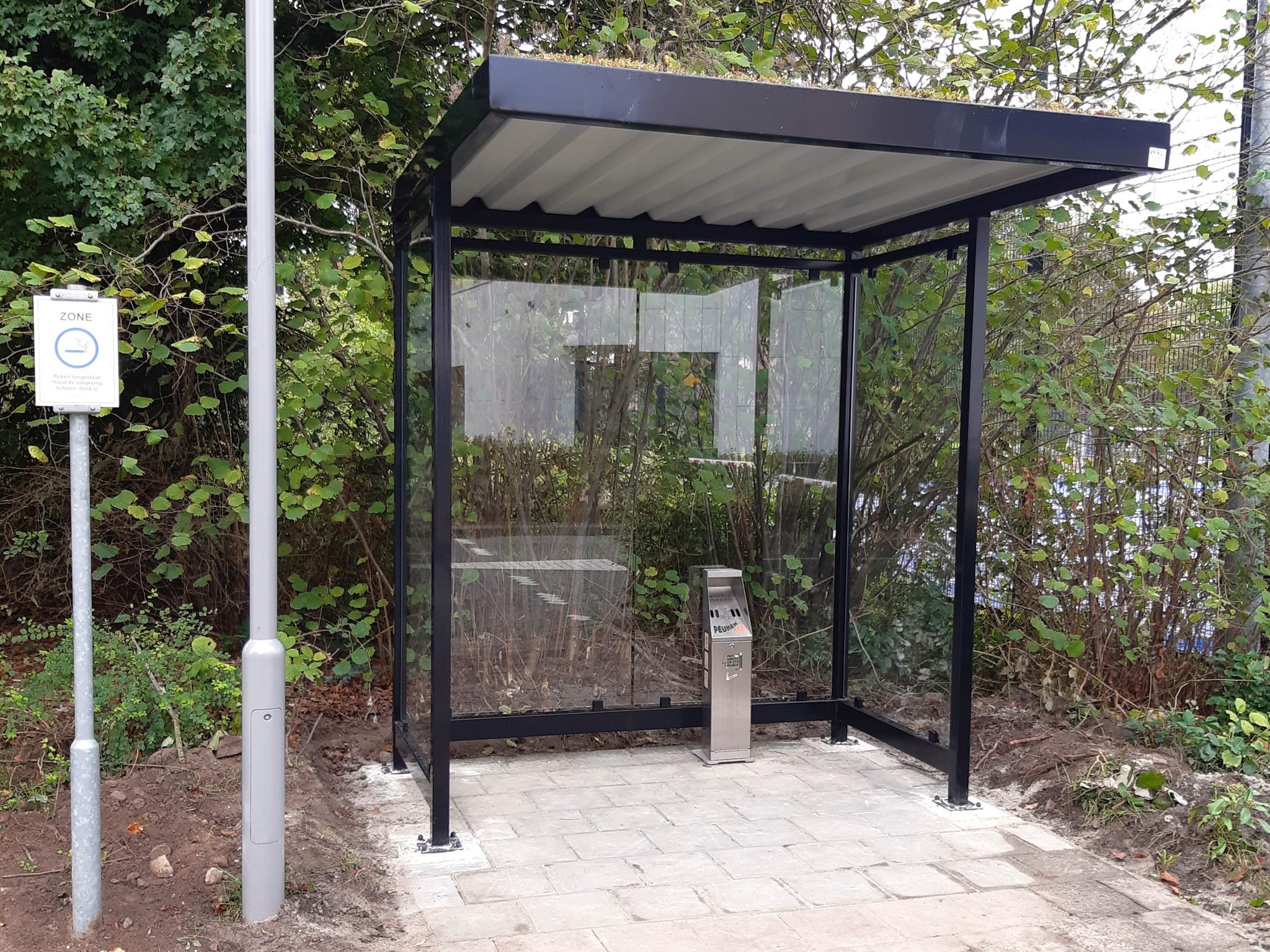
Only the smoking area behind the sports building, near the car park exit, remained in the same location and is now equipped with an abri.
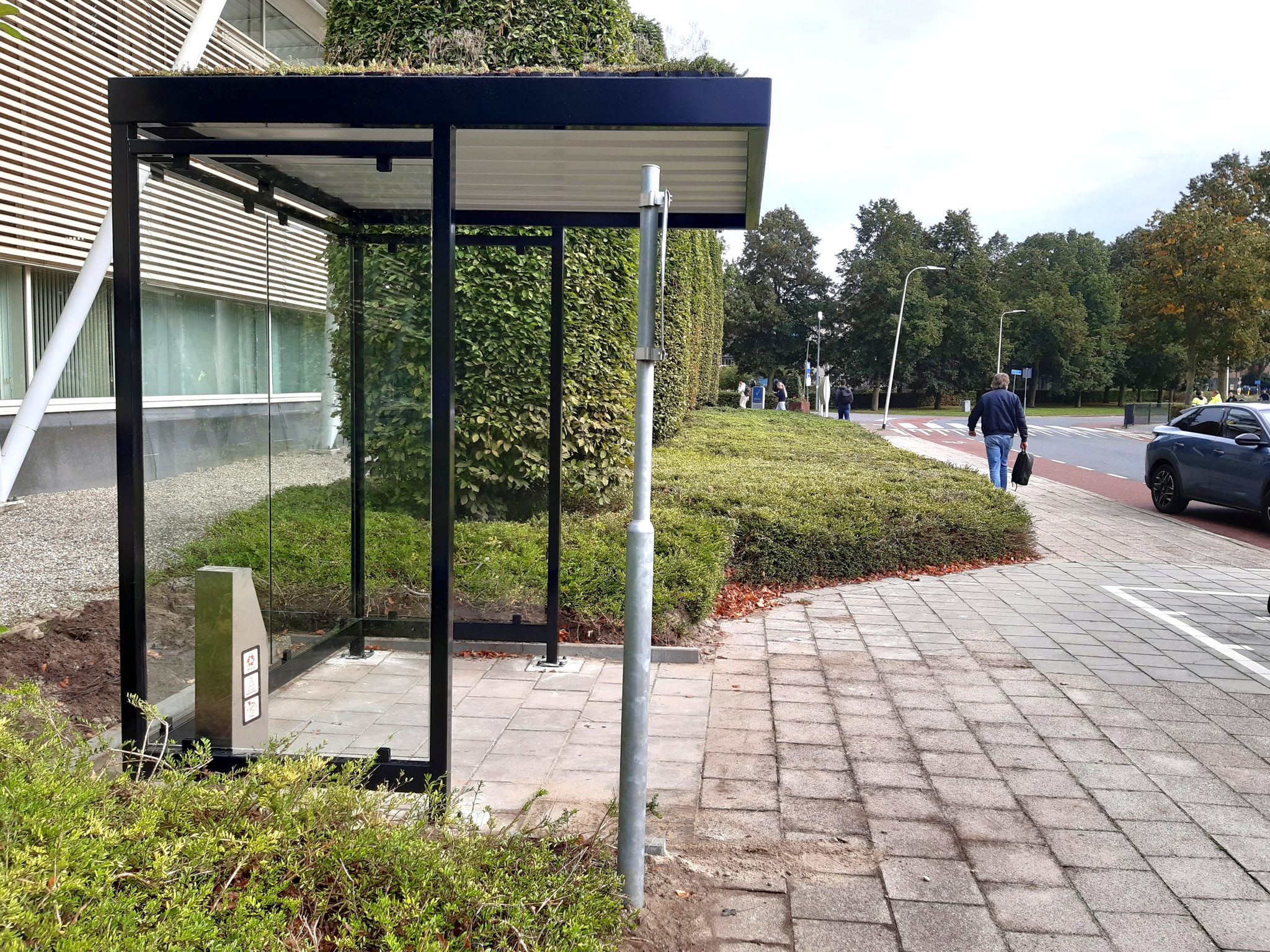
The smoking area on the sidewalk opposite the main entrance has been relocated to a planted strip next to the main building; it is also equipped with an abri.
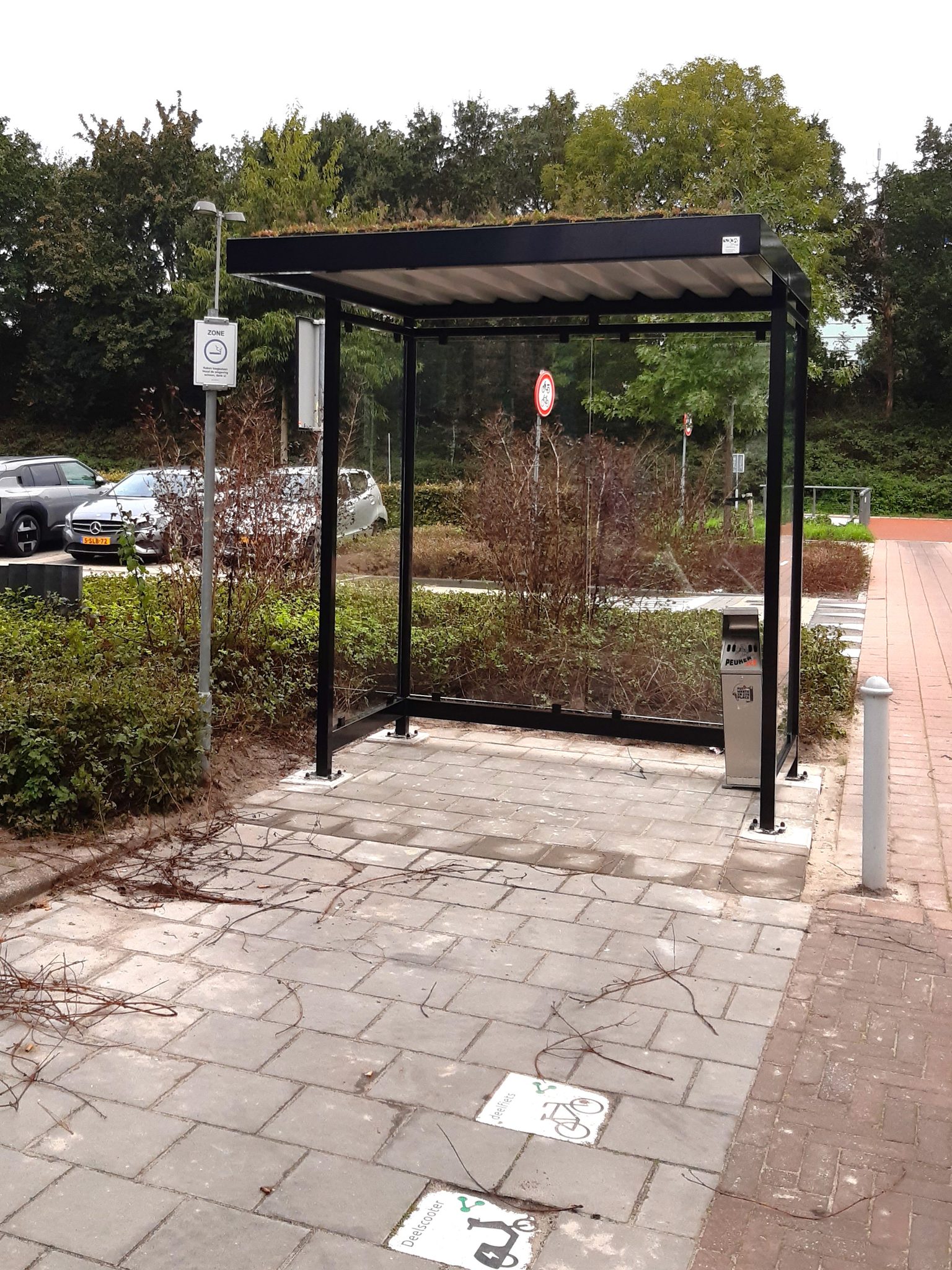
The smoking area behind Building D, before situated next to the cycle path by the small bridge, has now been moved to a planted strip beside Building D and is now also equipped with an abri.
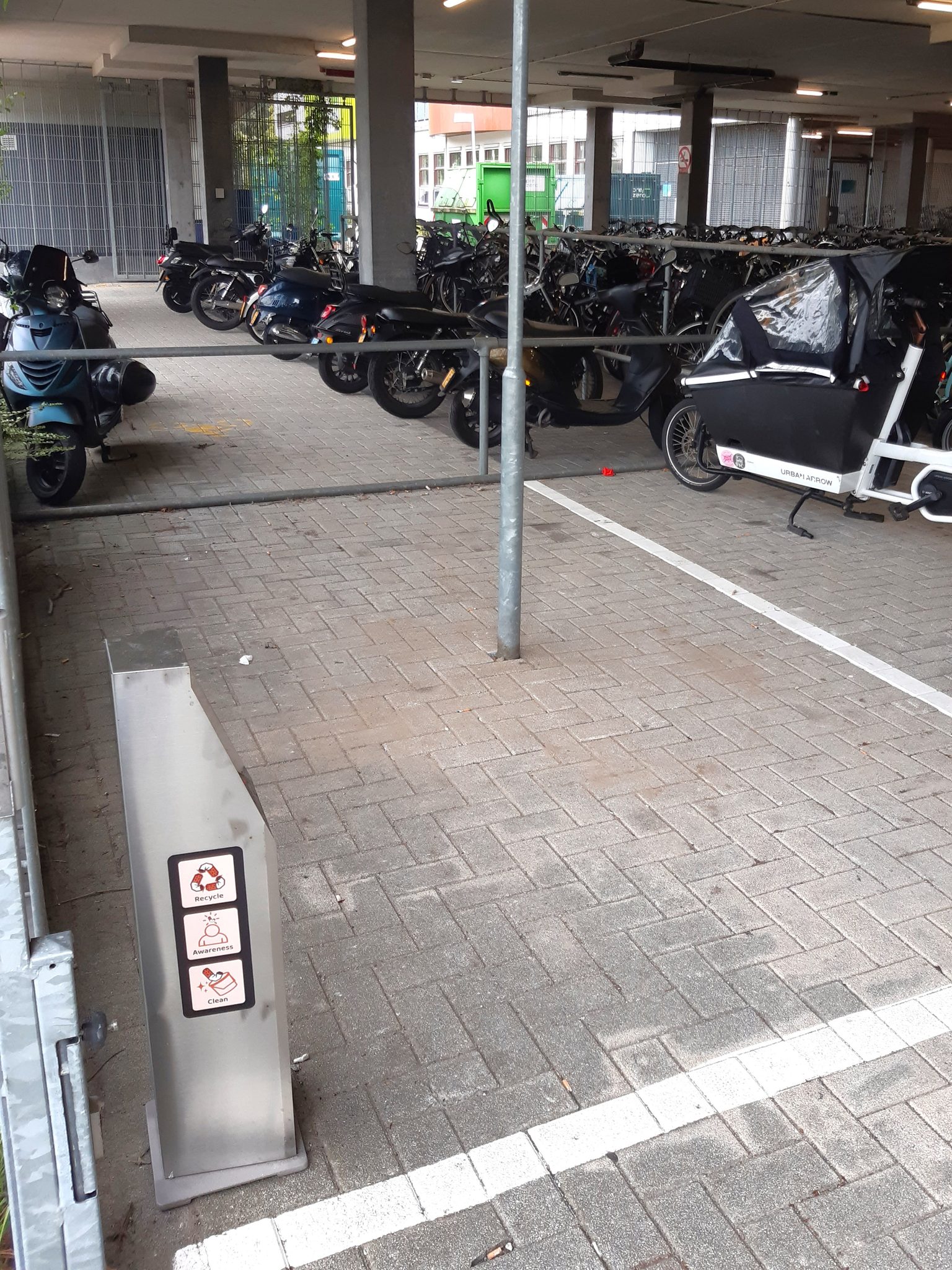
Most notable is the new alternative to the old smoking area behind Building X. The original spot was located along the cycle path leading to the bike storage area in the parking garage; it has now been moved inside the garage, behind the wire mesh fence near the vehicle entrance. The designated smoking area is marked out with white lines, situated next to the parked cars and the bike storage.
On the edge
Like many other large universities and universities of applied sciences that are campus-based, Windesheim is grappling with how to interpret the legal prohibition covering the entire site. Ideally, they want to place smoking areas as close to the edge of the grounds as possible. This is easily done where a public road runs right alongside the campus, such as near the main building. However, that is not always feasible. At the rear of buildings D and X, the public road is further away, leading Windesheim to opt for two locations just inside the site’s boundary.
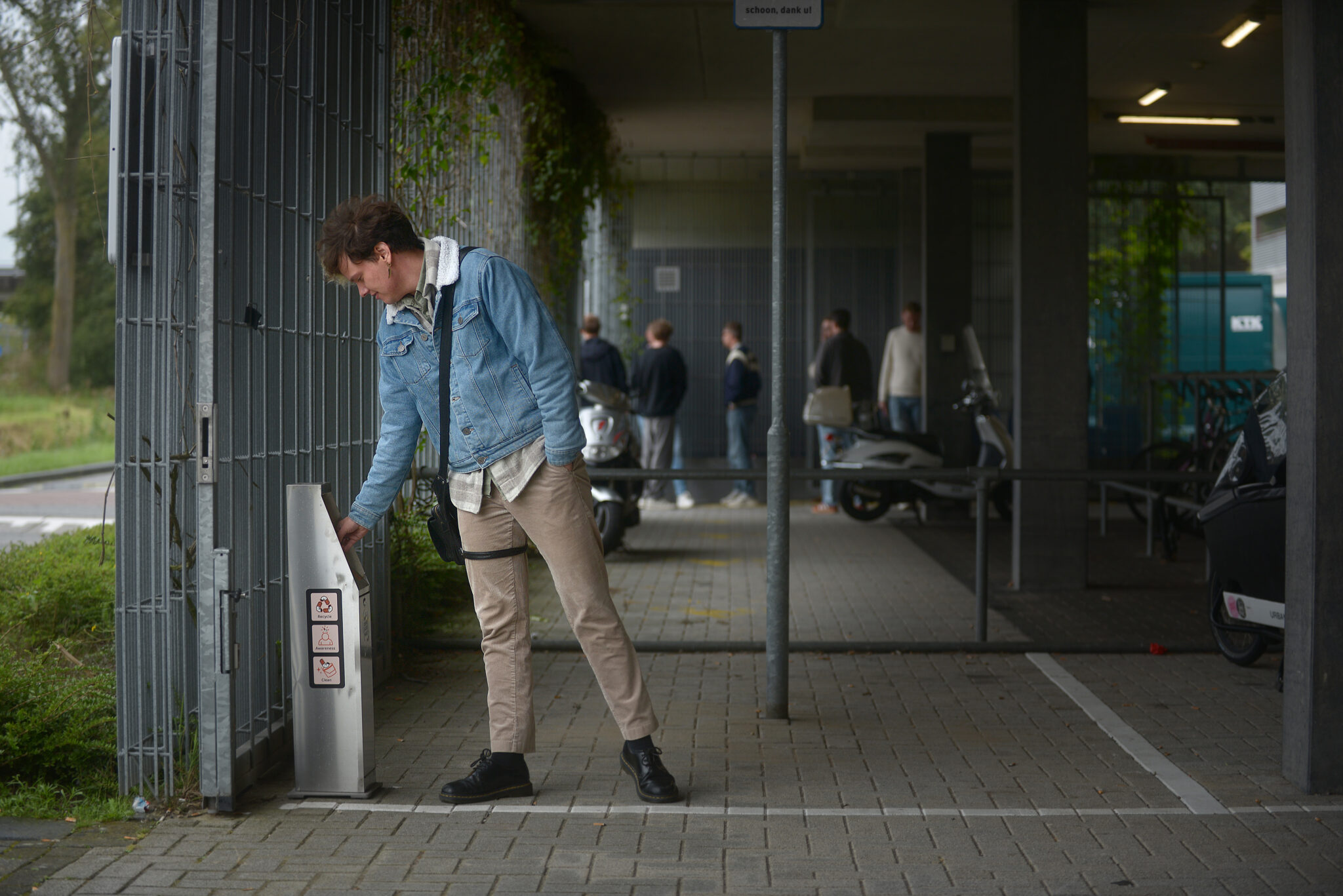
Halbesma: “Our main goal is to get smokers into the designated smoking areas so that others are less affected by it. To do that, however, we need to be able to direct them to well-equipped locations. At the garage entrance, for instance, there is shelter for when there is bad weather. At the same time, we will ensure that smokers actually stick to those designated areas. Meaning that they stop smoking elsewhere outdoors and that they properly dispose of their cigarette butts in the ashtrays.”
Seasoned smokers often play dumb when someone points out that they aren’t allowed to smoke in front of the main entrance: “Oh, I really didn’t know that!”, yet an hour later you see them smoking in that exact same spot. This is demotivating for those who confront them. Nevertheless, Halbesma believes it is crucial to keep addressing the issue with smokers. “Ideally, we’d like to see smokers setting a good example for one another, but it is also important for other colleagues or fellow students to be willing to speak up. Many caretakers frequently engage in discussions with smokers, too. But enforcement isn’t solely their responsibility.”
Security guard
To improve the monitoring of compliance with the smoking rules, Windesheim has entered into a partnership with students from Deltion College’s Security Guard vocational education & training study programme; these students will be doing internships at Windesheim as security guards. One of their tasks is to speak to smokers, both indoors and outdoors, about the smoking regulations and direct them to the designated areas.
In addition, communication regarding the smoking policy has been reviewed. Last month, signs were installed across the campus grounds bearing the clarifying message: ‘If you are standing outside a building, you are still on campus grounds.’
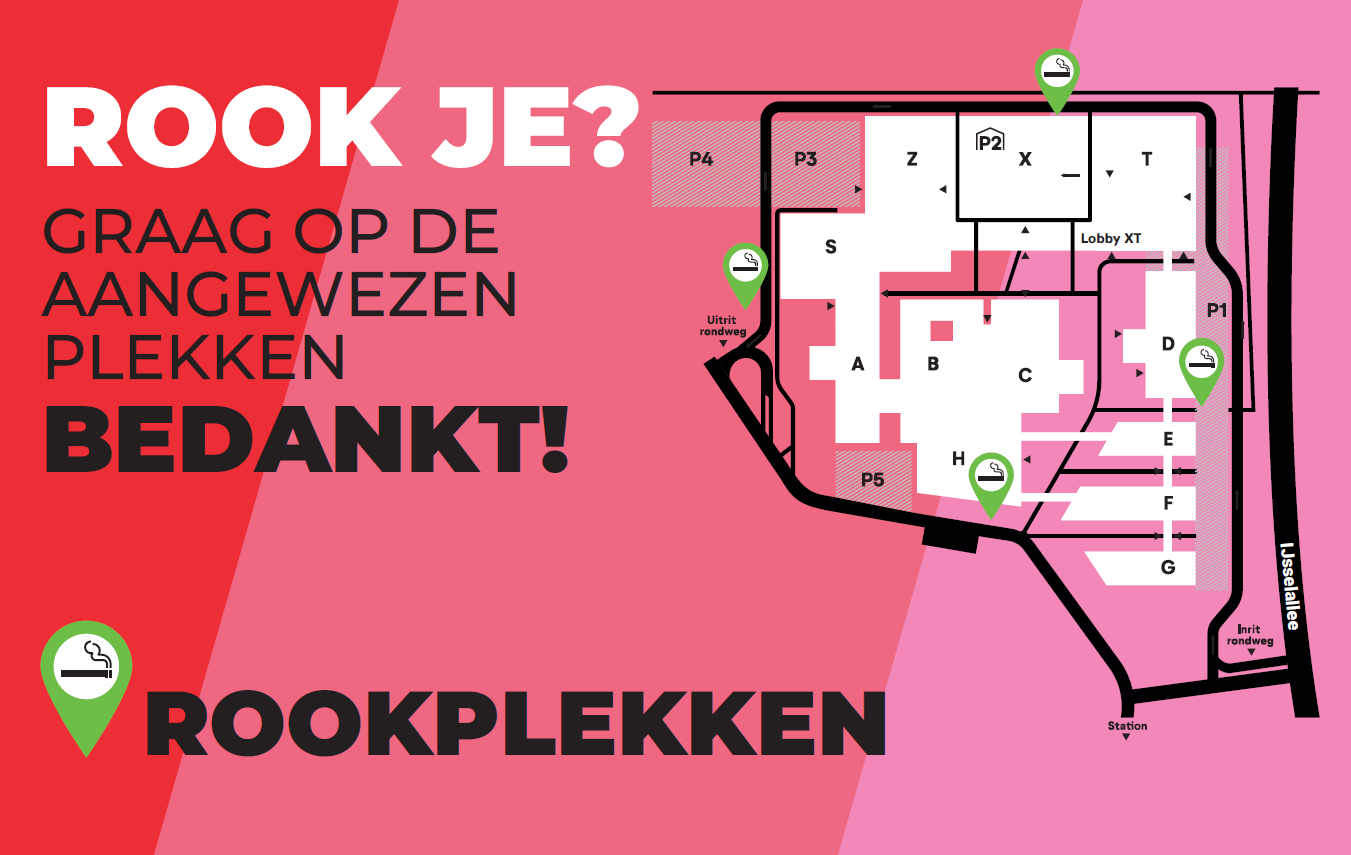
Internal communication channels are being used to draw attention to the smoking policy and the new map showing designated smoking areas. During ‘Stoptober’ in October, extra emphasis will be placed on providing support to smokers who wish to quit.
“To specifically address the nuisance caused by discarded cigarette butts, we have entered into a new partnership with Peukenzee, a small company founded by students to eliminate the abundance of butts on the streets,” says Van Vilsteren. “They will visit the campus every two weeks to collect cigarette butts for recycling, engage with smokers, and hand out pocket ashtrays.”
Umbrella
What do smokers think of the new measures? Maria Garcia Alvarez, a lecturer at Global Project and Change Management, served on the working group to provide input on behalf of the study programmes. She is an occasional smoker herself.
“I hear a lot of positive feedback from smokers about the abris; as a smoker myself, I’m also happy with them. It’s great not having to stand under an umbrella in the rain at the smoking area anymore. And it’s also good that smokers can no longer use bad weather as an excuse to secretly linger near the entrances.”
She herself is also annoyed by smokers who toss their cigarette butts on the ground. “I sometimes speak to students about it. Students who know me from my study programme tend to listen, but if they don’t know me, I usually just get a frown in return. On the other hand, as a smoker myself, I fully understand what it feels like when people treat you almost like a criminal just because you smoke. That kind of stigma is particularly unpleasant when you’re standing in a designated smoking area that everyone passes by; sometimes people shout or mutter something unkind.”
Pushing boundaries
The gpcm-lecturer considers it important to listen to one another, address issues constructively, and, above all, show respect in communication. “Of course, students are at that age where they want to push boundaries. But perhaps the new patrol officers from Deltion College will have more success engaging in dialogue with the students, given that they are of a similar age.”
Garcia Alvarez adds: “The working group asked whether Windesheim might be able to issue financial penalties to persistent offenders. But handing out fines isn’t possible. Currently, the only available sanction is an official warning from one’s study programme or department manager. However, they can only take formal action in cases of serious misconduct.”
She is pleased that the working group, with a wide range of people, looked at all the practical factors that make it easier or harder for people to stick to the smoking rules. “You can never please everyone, but this seems to be an improvement for most.”
‘We aren’t the smoking police’
As an educational institution, Windesheim is obliged to monitor compliance with the smoking policy rules. But in practice, this turns out not to be easy. Interns from the Deltion study programme Security Guard will assist with this task.
Caretaker Richard van der Vegte is one of the supervisors for the Deltion students who will be doing internships at the Zwolle campus.
He is one of two caretakers who are trained security guards. “People often mistakenly think that the building caretakers are responsible for enforcing the smoking policy. They expect us to walk around like a kind of ‘smoking police’, catching smokers who are in the wrong place.”
Van der Vegte: “But that is not our job. Careteakers are a point of contact for students and staff on all kinds of matters. You have a very social role, and that includes having conversations with people, but not creating an atmosphere where people feel like they are being monitored or observed. You don’t want to be seen in a negative way. Some caretakers smoke themselves.”
Because caretakers are often outside, they often know personally the students who secretly smoke. “Then you have to start having the same discussion repeatedly. Sometimes the atmosphere can become uncomfortable. In the old situation, it was especially unpleasant for us to send smokers across the street during a rain shower. Then you were already happy if the smokers stood a little further away from the entrance under the shelter. Now, we can send them more easily to the designated covered smoking areas.”
He emphasizes that it is not only student smokers who can refuse to follow the rules. “Also teachers and staff members sometimes flatly refuse to go to the designated smoking area. Formally, caretakers and security guards cannot do anything about this other than address the person about it. We are not allowed to remove them from the premises or anything like that.”
Only in cases of serious misconduct a security guard can take further action. The supervisor or programme manager is then involved. “But as far as I know, no sanctions have been imposed on a smoker so far. In such cases, the question what exactly was the ‘misconduct’ can often turn into one person’s word against another’s.”
The first group of Deltion students will probably start their internships as security guards in October. They are students from two courses at Deltion: Beveiliger 2 and Beveiliger 3. As qualified security guards they are allowed to carry out security tasks. Van der Vegte: “The students will be wearing uniforms as they walk around the buildings and the outdoor areas. One of their tasks will be to help monitor compliance with the smoking policy, but they will also assist us with other duties.”
text: Ernest Mettes
photos: Jasper van Overbeek
