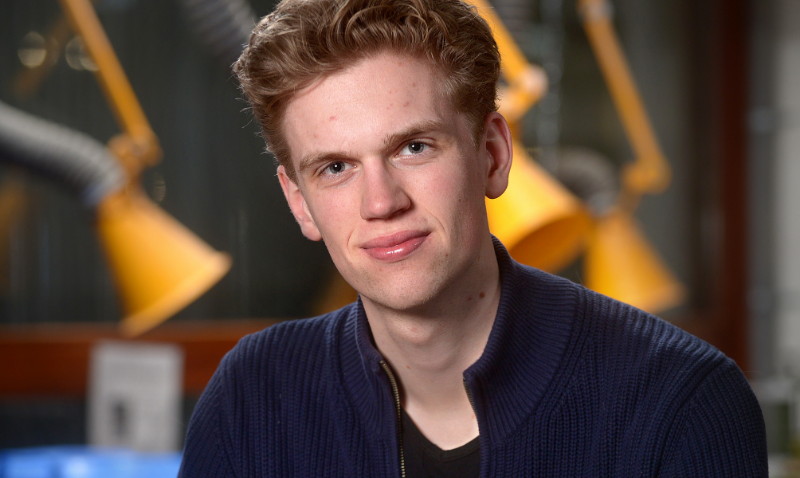
A new stadium for Feyenoord, a bridge over the IJ, the Kinderdijk windmills in Rotterdam: you name it, Architecture and Construction Engineering student Maxim van den Boogaard has made a design for it.
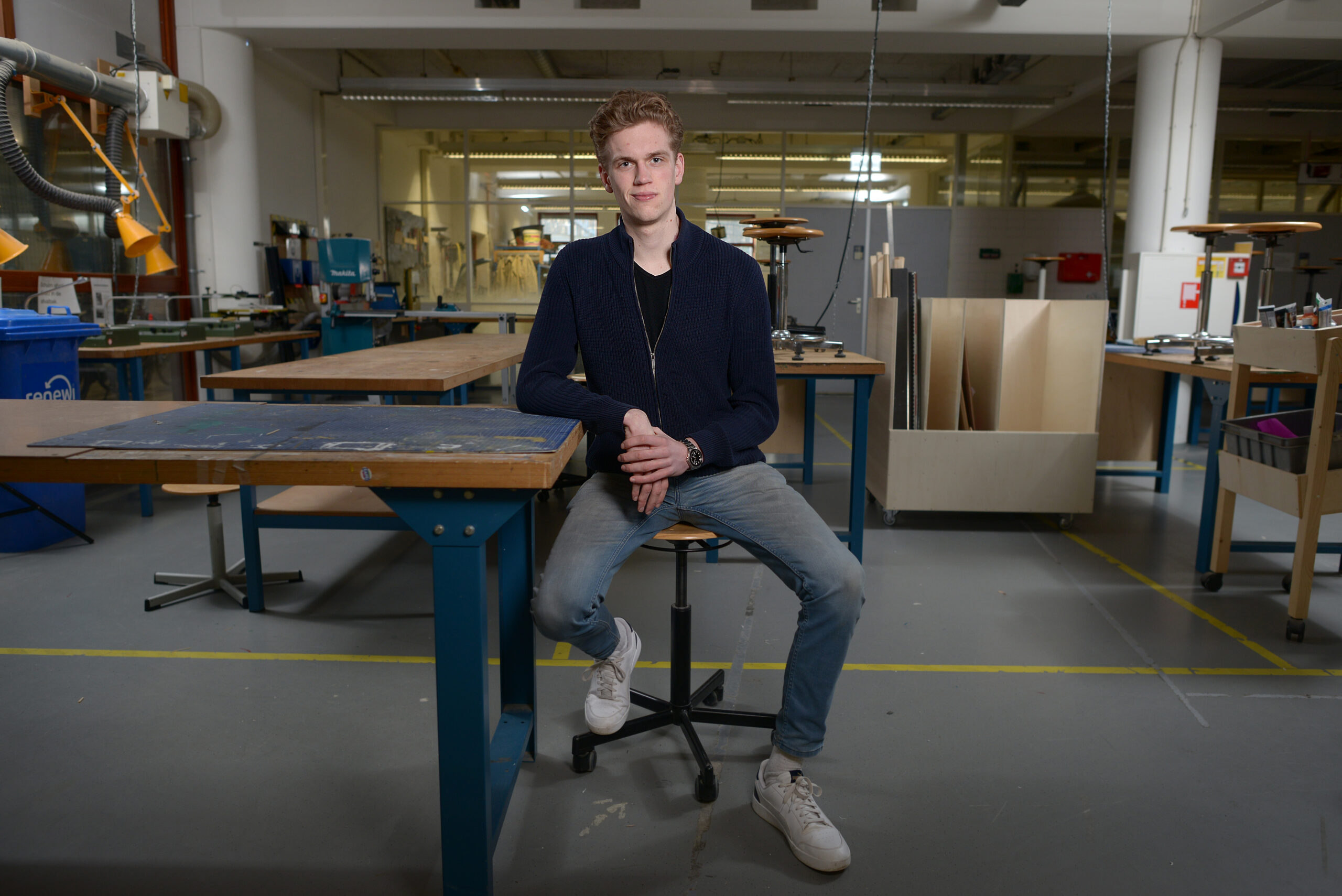
Third-year student Maxim (19) has known for a long time exactly what he wants to become: an architect. There’s nothing he loves more than creating striking designs, for example, buildings or bridges. To develop himself alongside his studies, he creates his own designs based on plans he sees in the news or happening in his hometown. He often thinks, looking at the design sketches for large construction projects, “Hey, that could be done differently, or better.” He then creates designs at home on his computer, often working on them for weeks, and sends them to municipalities, politicians, and others involved.
This almost always leads to an invitation to explain his plans. If you Google his name, you’ll find a whole series of newspaper articles about the designs he has created. “I want to offer people a different perspective, for inspiration, how I think things could be done differently. And I can really express my creativity here; I just have to let it all out.”
Corkscrews and Kinderdijk
Maxim was only sixteen when he was first invited to give a presentation to a city council. “I was in my fifth year of secondary school and had designed a bridge over the Wolderwijd, the stretch of water between my hometown of Zeewolde and Strand Horst near Harderwijk and Ermelo. A bicycle bridge had been discussed for ages, but the idea was never realized. It was either too expensive, people didn’t like the design, or boats couldn’t pass underneath.”
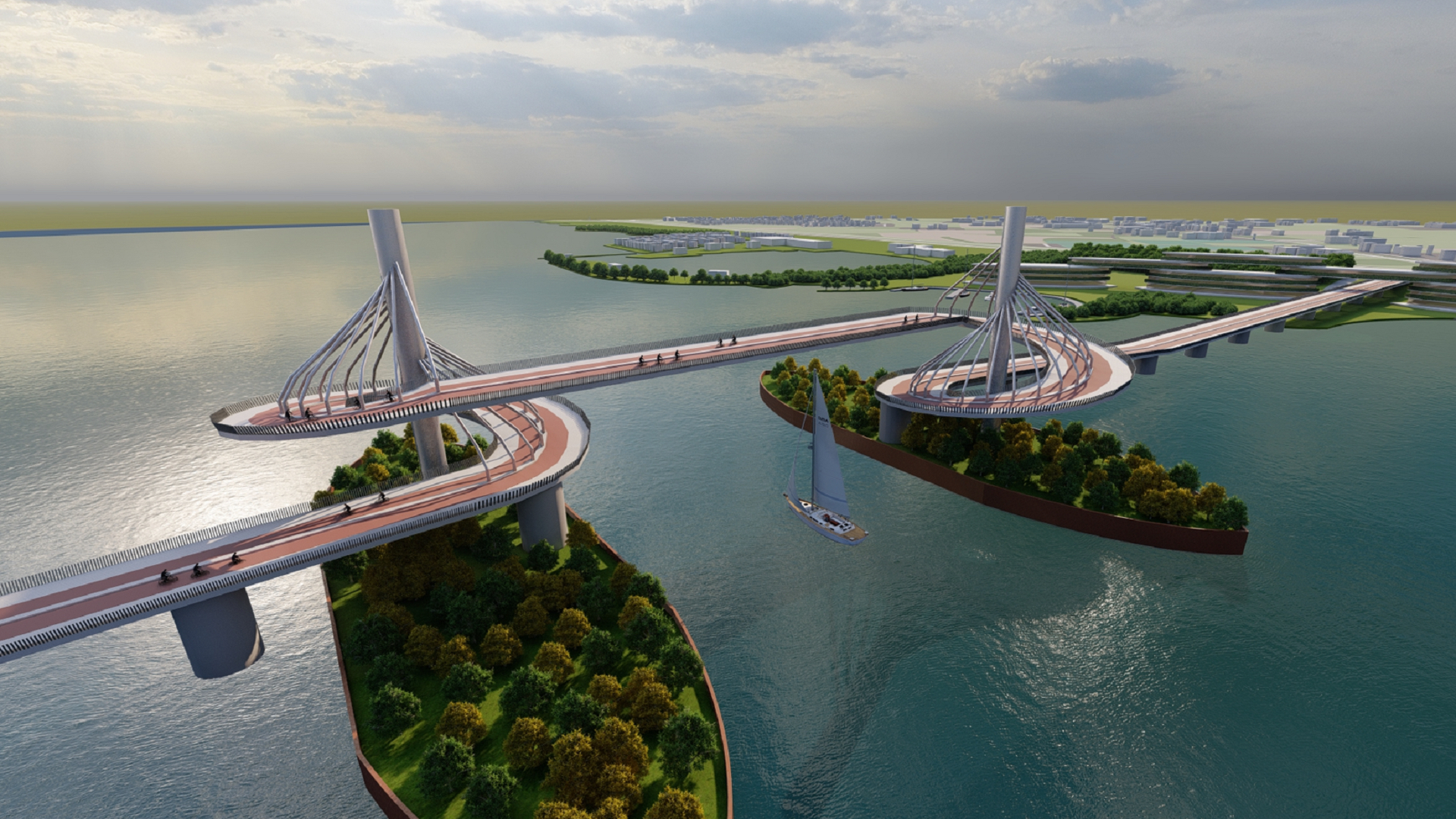
What if I make something completely different, Maxim thought. “That’s how I came up with the idea of adding houses in the bridge design to make it financially feasible. And the bridge in my design has two ‘corkscrews’ to reach the required height of thirty meters.” Maxim was asked to explain his design at a meeting of the three municipalities. “That was a lot of fun. They found my plan very interesting.”
The design for a large bridge over the IJ River with social housing, which he created with a high school classmate, also stood out. “We presented it to a member of the Amsterdam city council at the time.” The national newspaper Het Parool featured it and stated about the bridge with 660 homes: ‘That’s something we can certainly use in Amsterdam.’
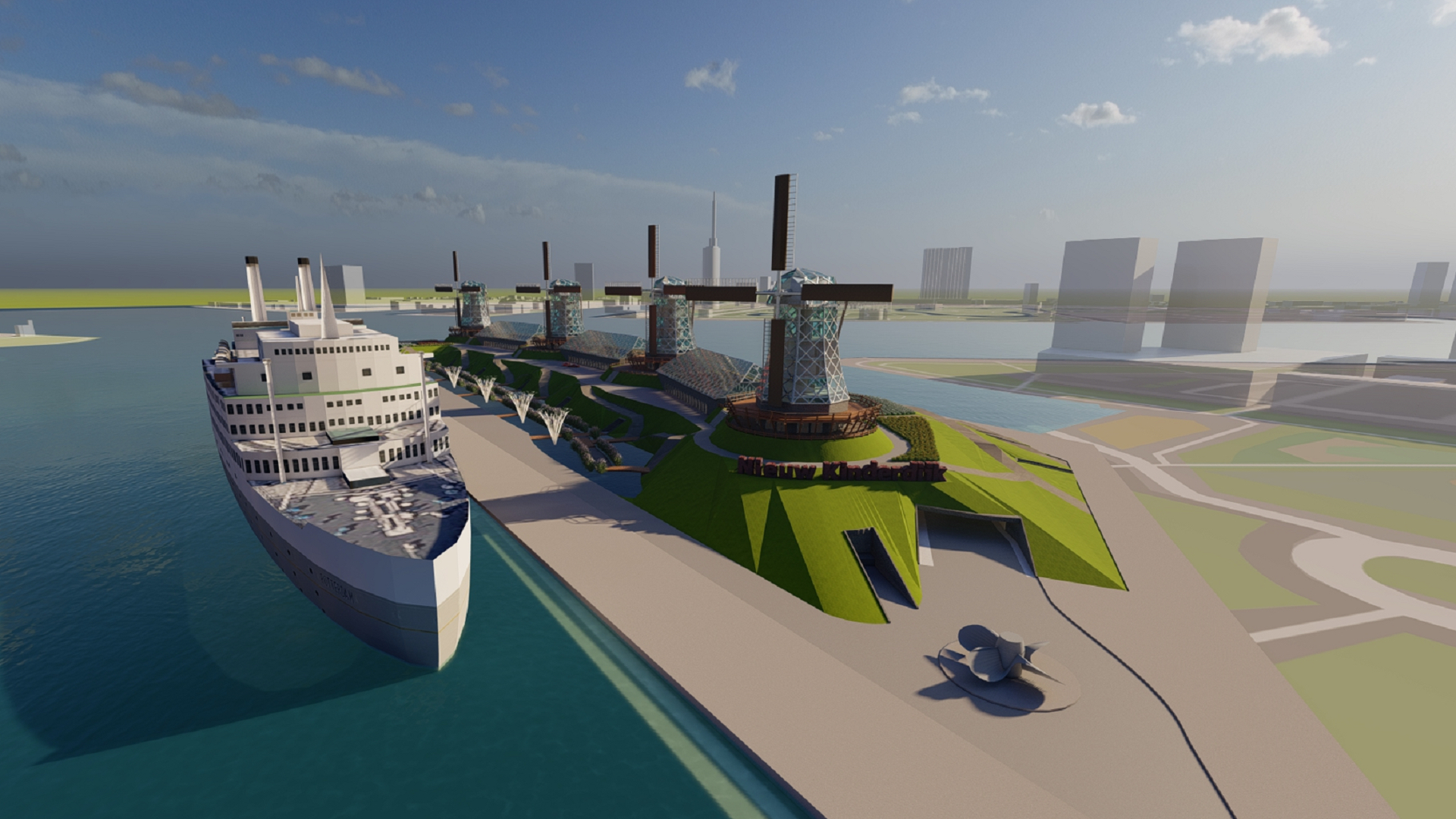
Maxim came up with another spectacular design for the city of Rotterdam. A large parking deck topped with four eye-catching windmills, strongly reminiscent of the iconic tourist attractions in Kinderdijk opposite the famous SS Rotterdam, the largest passenger ship ever built in the Netherlands. “The parking deck is currently a large, bare concrete slab. Yet it’s a beautiful location in Rotterdam! On the Kop van Zuid, as it’s called, opposite that iconic ship, and you also look out towards the Euromast.”
Feyenoord City
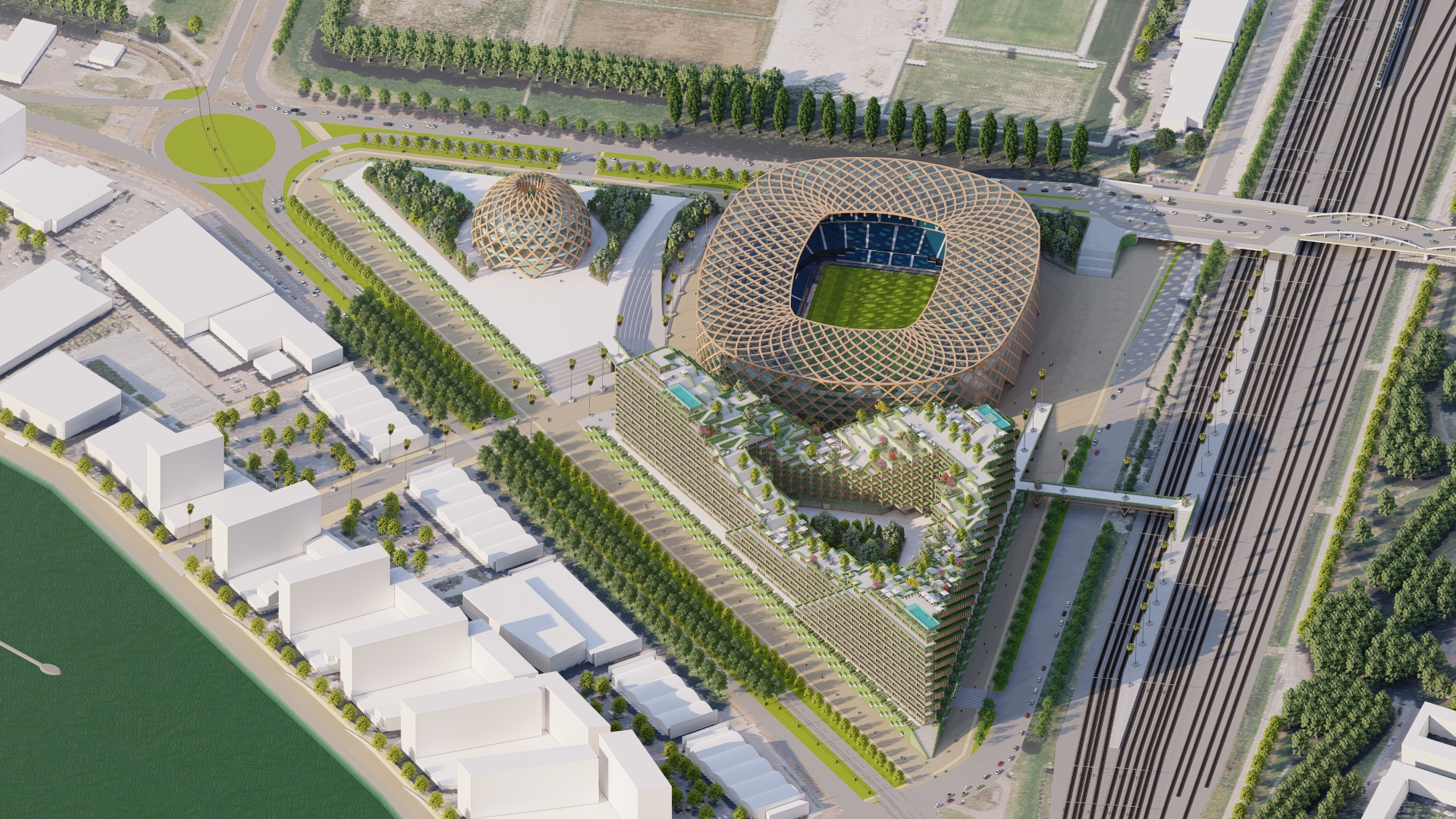
The design Maxim spent the most time on is his most recent project: a new football stadium for Feyenoord, including a detailed plan to develop the entire adjacent site, including casinos and hotels. “All existing plans for new construction or renovation primarily focus on the stadium, but the problem is always the financial feasibility. I thought it could be more ambitious. In my plan, the stadium will be renovated and expanded, and several casinos and large hotels will also be added. That way, we can actually make the financial picture work.”
Maxim poured a thousand hours of work into this plan, the equivalent of twenty-five forty-hour work weeks. “I studied the previous plans and then came up with and developed my own idea. I focused on the relationship between the stadium and its surroundings, a strong wow factor, and minimalist and sustainable architecture. I incorporated everything into detailed 3D models, renders, and animations. I started in August 2024 and finished it during the summer holidays.”
Freedom
Maxim doesn’t have any illusions that any of his designs so far will become reality. “They hire large, well-known architectural firms, not a 19-year-old Architecture and Construction Engineering student. But I don’t mind. The time I put into it isn’t a punishment, I really enjoy doing it! It offers a freedom I don’t have as much in my studies when working on assignments. And above all, it’s very educational.”
With everything Maxim is doing to develop himself alongside his studies, the question arises whether his study programme at Windesheim isn’t offering enough of a challenge? “No, because I’m learning a lot here. For example, how a building is structurally sound, how materials work together within legislation and regulations, and how you can make sustainable choices based on building physics. But even after I graduate here, I still won’t be an architect. That’s why I want to continue studying at the university. And where do I see myself working later? I want to work on plans that excite me, that allow me to be creative. I want to create designs that are distinctive.”
text: Wouter van Emst
photo: Jasper van Overbeek
illustraties: Maxim van den Boogaard
